What Is the Job of a Art Director in Publishing
What is an Art Director?
Exercise you accept a keen eye for visual design? Do you love getting involved with projects and working with other people? Condign an art director might be something you'd like to consider!
Art directors are responsible for the visual style and images in magazines, newspapers, production packaging, and movie and television receiver productions. They create the overall design for a project, and also direct others who develop the artwork or layouts.
Art directors work for advertising and public relations firms, paper and magazine publishers, specialized design services firms, and the theatre, movement picture and video industries.
What does an Art Director do?
An fine art manager typically oversees the work of other designers and artists who produce images for television receiver, film, live performances, advertisements, or video games. They decide the overall style or tone desired for each project and articulate their vision to artists who submit images, such as illustrations, graphics, photographs, charts and graphs, or stage and picture show sets.

An art managing director volition work with the art and design staff in advertising agencies, public relations firms, and book, magazine, or newspaper publishers to create designs and layouts. They also work with producers and directors of theatre, television, or picture productions to oversee gear up designs.
Their work requires them to understand the pattern elements of projects, inspire other artistic workers, and keep projects on budget and on time. Sometimes, they are responsible for developing the budgets and timelines.
An art director will typically do the following:
- Determine how all-time to stand for a concept visually
- Determine which photographs, art, or other design elements to use
- Develop the overall look or style of an advertisement campaign
- Develop the overall look or style of a theater, tv, or moving-picture show ready
- Supervise pattern staff
- Review and approve designs, artwork, photography, and graphics
- Talk to clients to develop an artistic arroyo and manner
- Coordinate activities with other artistic or creative departments
- Develop detailed budgets and timelines
- Present designs to clients for approval
Note: Although fine art directors are expected to accept some graphic design judgment and technical knowledge of production, information technology is not necessary for them to manus-render layouts or even be able to draw (as basically all but the near preliminary work is now done on computer).
Strong conceptual skills are needed as an art managing director. Co-ordinate to Kaitlyn Angstadt, senior art director at Brownstein Group in an interview with MediaBistro: "To create something meaningful, y'all must beginning with a strong idea. This is the courage of commercial art. Skillful communication skills are also essential. Your team has to sympathise what you lot want in lodge to deliver it. Clearly articulate your vision or hazard jeopardizing the quality of the project."
As an art director, you're always on, Angstadt says. "There's never a time when yous're not thinking of new ideas," so loving what yous do is important. Ditto having a thick skin. In this line of work, every bit with other creative jobs, you have to be able to take criticism, even when you don't hold with the feedback. If you don't hit it out of the park the first or 2nd or 3rd go-round, dust yourself off and try again. It'll make your home run that much sweeter."
Art directors work in a variety of industries, and the blazon of piece of work they do varies somewhat with the industry. However, nearly all art directors set the overall artistic way and visual prototype to be created for each project, and oversee a staff of designers, artists, photographers, writers, or editors who are responsible for creating the private works that collectively make upwards a completed production.
The following is a cursory outline on what fine art directors can do in unlike industries:
In publishing, art directors typically oversee the folio layout of newspapers and magazines. They too choose the cover art for books and periodicals. Oft, this piece of work includes web publications.
In advertising and public relations, art directors ensure that their clients' desired message and epitome is conveyed to consumers. They are responsible for the overall visual aspects of an advertising or media entrada and may coordinate the work of other artistic or design staff, such every bit graphic designers.
In movie production, art directors collaborate with directors to determine what sets volition be needed for the pic and what style or look the sets should have. They hire and supervise a staff of assistant fine art directors or set designers to complete designs.
Most art directors will take worked for several years in some other occupation before being hired as an fine art director. Depending upon the industry, they may accept spent some time working as a graphic designer, fine creative person, editor, lensman, or in some other art or pattern occupation earlier becoming an art manager.
For many artists, including art directors, developing a professional looking portfolio (a collection of work that demonstrates one's style, ability, and expertise) is essential in landing a job. Agencies, directors, publishing houses, and clients all look at artists' portfolios when they are deciding whether to rent or contract for a project, big or modest.
Strong contest for jobs is expected in the futurity, as many talented designers and artists are looking to move into art director positions. Individuals with a practiced portfolio, which can demonstrate strong visual design and conceptual work beyond all multimedia platforms, volition have the all-time prospects.
What is the workplace of an Art Managing director similar?
In a typical work environment, fine art directors:
- Have a lot of social interaction
- Work with customers
- Work with creative staff
- Accept responsibleness for work done by designers, artists, photographers, etc.,
- Work with teams or groups of people
- Select and piece of work with teams
- Resolve issues over the direction of a project
- Communicate with customers
Fifty-fifty though most fine art directors are self-employed, they must even so interact with designers or other staff on visual effects or marketing teams. Fine art directors usually work more than twoscore hours per week in a fast-paced office surroundings, and they often work under force per unit area (and on weekends) to meet strict deadlines.
Oftentimes Asked Questions
What types of industries do art directors work in?
The championship 'art director' can be used inside a diverseness of industries, such every bit the publishing, marketing, advertising, theatre, gaming, manner, film and television, and online industries. The job itself takes on different responsibilities depending on the visitor and industry one works for.
For the most office, notwithstanding, all art directors will set the general artistic style and visual prototype that needs to exist created for each project, managing the output from writers, editors, designers, artists, and photographers in guild to bring a project to fruition. An fine art manager'southward primary business is to inspire and guide their squad so that each and every component of a projection will come together to produce an appealing visual whole.
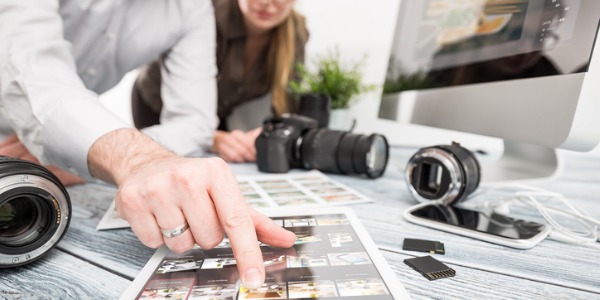
The Publishing Industry
In publishing, art directors typically work with the publication'due south editor(s) and oversee the concept for specific sections and page layouts of catalogs, newspapers, or magazines.
The fine art managing director is ultimately responsible for the look and feel of a publication, and the editor is responsible for the publication's written content. Art directors also choose the cover fine art for books and magazines, and considering this work often includes publications for the Internet, they oft oversee production of the websites used for publication.
There is a significant amount of multitasking involved in being the art director of a publishing house, such as juggling the different stages of product that multiple books or magazines can be in.
As Diane Chonette, an Art Director at Tin Firm, describes in an interview with Writers & Artists, "There are always books in various stages of product and the quarterly mag is either at the showtime of the production process or ready to become to the printer. A lot of art department back up is likewise given to our marketing and publicity team, which includes creating clever press packages, printing galleys/ARCs (Advance Reader Copies), or generating website and social media banners."
"A single day can include sending a volume off to print, showing cover concepts, reading and researching for magazine interior art, and obtaining galley quotes from a printer for an upcoming book. In that location are usually east-mail requests for files or jacket images that I squeeze in between the other bigger tasks. I think having so many balls in the air is one of the best parts of my job though—keeps my mind active and the twenty-four hour period goes quickly."
The Advertizement & Public Relations Industry
Fine art directors that work for advertising agencies are a very important role of the creative team. The squad typically consists of an art director (responsible for the overall visual aspects of an advertizement campaign) and a copywriter (responsible for the text of an advertising entrada). The fine art director and copywriter are usually overseen by a creative director, or chief creative director.
In this blazon of industry, art directors are also responsible for coordinating the work of other creative staff (for example, graphic artists) and bringing everything together for the client so that the desired bulletin and prototype are properly conveyed to the consumer. Each person involved in the projection collaborates together and welcomes suggestions and constructive criticism from each other, which serves to enhance the last product.
Advertizing firms are no longer limited to ad in print or movie media. New age media outlets are now taking over and are now the industry norm (such as social media marketing, mobile communications, and the web).
This means other types of services are existence offered to clients, such as media planning, brand management, public relations, and promotional events. Therefore, the art director has a wider range of responsibilities than in the past.
These responsibilities may include going over things with the management team and the client's representatives, coming up with ideas and concepts in collaboration with the creative team, preparing campaigns for client blessing, and making arrangements for creating the advertisement and bringing the project to fruition.
In a large company, an art managing director may accept the responsibleness of also overseeing other art directors, image developers, production artists, and junior designers. In minor companies, an art director may end up fulfilling all the same roles.
The Movie Product Manufacture
Art directors in the motion-picture show and movie product industry piece of work directly below the production designer, and besides work very closely with ready decorators, set designers, and assistant fine art directors. They interact with directors and screenwriters in order to understand what manner or look a ready should have, and to know exactly how many sets will be required for a production.
Screenwriters are key in providing the art director with a experience for the type of story that needs to be told, and in shedding low-cal on how the visual selections will help to set the ambience of a film or episode.
Visual selections can provide the audience with an incredible amount of insight into a grapheme'southward personality and background. Everything, from a picture hanging on a wall, to the colour of a dress, is a visual design pick made past the fine art director and the heads of various departments.
The various departments usually include the art, construction, locations, property, transportation, and special FX departments. Art directors are responsible for assigning tasks to the personnel from each of these departments, and for keeping track of budgeting, scheduling, quality control, and attending production meetings.
Regardless of the industry an art director is in, there is a consistent theme to existence successful in this career. As Blimp Creative founder James Fenton explains: "As an art managing director y'all must exist a leader; someone who inspires and guides the vision of the design team. You take to be able to recognize the talent in those around you and learn how best to get the best from them."
"The role of the fine art director could be compared to that of a chef, fusing together ingredients to produce a card of delightful dishes," he explains. "All designers inject their individual personalities, tastes and way into their work. It is the art director'south role to identify and empathize the unlike flavours each member brings to the team, and and then advisedly infuse them to complement 1 another."
Continue reading
Art Directors are too known as:
Fine art Supervisor Creative Director Design Director Advertizement Art Manager
Source: https://www.careerexplorer.com/careers/art-director/
0 Response to "What Is the Job of a Art Director in Publishing"
Post a Comment